
The Secret World of Agarwood
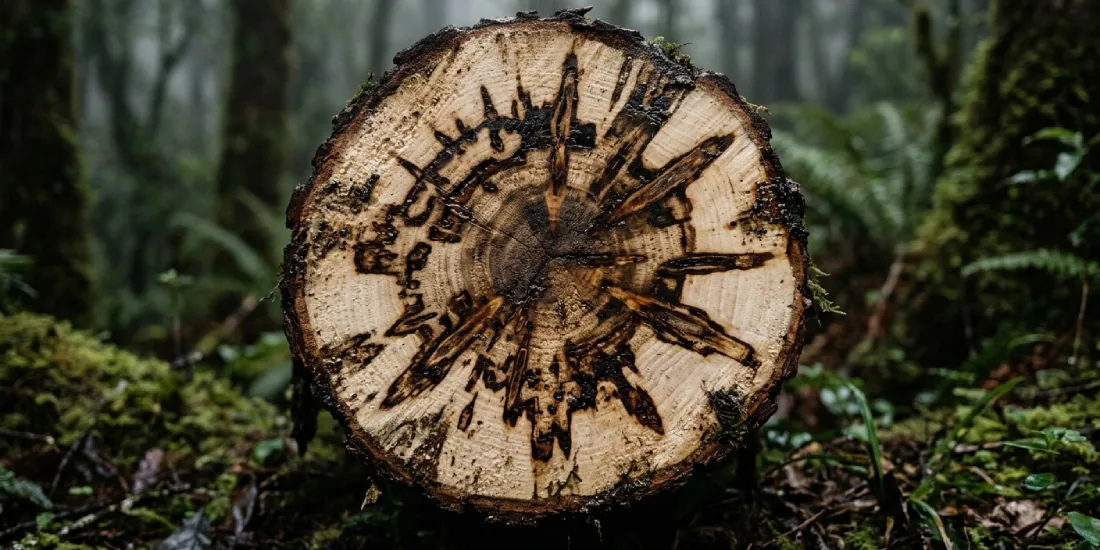
Welcome to the By Islamov Journal, where we explore the narratives behind the world’s most profound aromatic ingredients. Today, we invite you into a realm of shadow and sunlight, patience and transformation—the hidden universe of the element that defines modern luxury: Agarwood.
The Enigma of the Ancient: Why Agarwood is “The Wood of the Gods”
There is an aroma that transcends time. It is deeper than soil, sweeter than honey, and older than memories. Across civilizations—from the incense of ancient Egyptian temples to the medicinal records of East Asia and the royal perfumery of the Arabian Peninsula—Oud perfume has remained the zenith of olfactory art.
But what is it that makes rare agarwood so universally captivating, yet so impossibly elusive? Its value often surpasses its weight in gold, not because of its sparkle, but because of its soul.
This article pulls back the lush foliage to reveal the truth about natural oud: a substance born of distress, transformed by nature, and captured by artisans to create the fragrances that have become the very definition of luxury oud.
From Distress to Decadence: How Agarwood Is Born
The most beautiful things often emerge from adversity. Agarwood is not simply the wood of a specific tree; it is the tree’s powerful, aromatic response to a wound.
To understand natural oud, we must look to the Aquilaria tree, a species native to the dense, tropical jungles of Southeast Asia. When healthy, the wood of the Aquilaria tree is pale, soft, and odorless. It has no value in perfumery.
However, sometimes the tree is wounded—perhaps by a fierce storm that breaks a branch, or by insects or microorganisms boring through its bark. In these wounds, a specific type of mold or fungus takes root.
The Phenomenon of Resin Formation
This infection is a threat to the tree’s survival. In response, the Aquilaria tree activates an extraordinary, immune-like defense mechanism. It produces a dense, dark, precious resin to isolate and fight the infection.
Over decades—often fifty years or more—this resin saturates the pale wood, transforming it. The once-soft, colorless sapwood hardens into dense, dark, or amber-toned wood: Agarwood.
This process is entirely unpredictable and exceptionally rare. Before human intervention, it was estimated that only 2% to 7% of wild Aquilaria trees produced rare agarwood, making every authentic find a true discovery.
It is this specific resin, embedded within the wood, that holds the complex, multidimensional aroma that perfumers crave. The darker the wood, the older the infection, and the deeper the fragrance.
Decoding the Spectrum: Types and Grades of Rare Agarwood
Just as diamonds are graded for their clarity, color, and cut, agarwood is classified by a strict, artisanal grading system that determines its value and scent profile. The process of grading is a master’s craft, requiring years of training to distinguish the subtle nuances of color, texture, and density.
The Factors of the Grade
There is no single global standard for grading, as the definition of quality can vary between cultures (e.g., Arabian markets prefer different qualities than Japanese or Chinese markets). However, several key factors consistently determine the luxury oud experience:
- Resin Density: This is the primary indicator of quality. The denser the resin, the darker the wood will be. The highest grades of agarwood are so saturated with resin that they are heavier than water and will sink. The Vietnamese term for this highest quality is “沉香” (Chén Xiāng), which literally means “Sinking Incense.”
- Age: The length of time the tree has been fighting the infection is critical. True luxury oud is often harvested from trees that are fifty to eighty years old, with the resin itself forming for decades.
- Origin: Agarwood from different regions possesses distinct aromatic signatures. Vietnamese agarwood is often described as sweet, warm, and spicy. Cambodian oud is prized for its fruity, honeyed notes. Indian oud is often intense, complex, and more animalic.
Kyara and Kinam: The Scent of Infinity
Within the hierarchy of rare agarwood, there is a level that exists almost as a legend. It is called Kyara (in Japanese incense culture) or Kinam (primarily in Chinese terminology).
Kinam is not just high-grade agarwood; it is a geological anomaly. It represents the pinnacle of natural aromatic complexity and is considered the single most expensive fragrance on Earth. While sinking-grade agarwood is already rare, Kinam is a once-in-a-lifetime occurrence.
What defines Kinam is its unique scent properties:
- It does not need to be heated to release its aroma.
- Its fragrance is multi-layered, often possessing notes of mint, vanilla, sweet honey, smoke, and cool spice, all swirling simultaneously.
- The sensory experience is described as a “taste” or a “feeling” as much as a smell.
Finding true Kinam is like finding the rarest pearl in the deepest ocean. For most, the encounter with Kinam is a momentary experience in a master-led incense ceremony. It is the gold standard by which all other luxury oud is measured.
The Art of the Extract: Sustainable Agarwood and Precious Oil
While the high-grade wood itself is used in sophisticated incense and carvings, it is agarwood oil that forms the heartbeat of modern perfumery. This oil is one of the most expensive raw materials in the world, often costing between $20,000 and $50,000 per kilogram (or significantly more for special distillations).
To ensure that this magnificent tree remains for future generations, the modern world has shifted toward sustainable agarwood. The demand for wild agarwood in the 20th century led to severe over-harvesting, threatening the survival of wild Aquilaria species. Today, international agreements like CITES (Convention on International Trade in Endangered Species) protect the wild trees.
Cultivation and Sustainability
Sustainable agarwood comes from carefully managed plantations. In this process, the Aquilaria tree is first allowed to grow to maturity (about 7–10 years). Then, specialized techniques are used to gently and predictably “inoculate” (infect) the tree with the specific fungus. The tree is then allowed to develop its precious resin for an additional 7–15 years before harvesting.
This form of natural oud is not only ethically responsible but also allows for a consistent quality control that ensures the future of luxury oud. The cultivation of sustainable agarwood is essential for maintaining a healthy global market and protecting our natural world.
The Alchemy of Distillation
The process of extracting agarwood oil is a delicate, slow, and precise science called hydro-distillation. It begins with the carefully harvested and sorted agarwood, which is cleaned and then ground into a fine powder.
This powder is soaked in water for several days—sometimes weeks—to naturally soften the fibers and begin to release the resinous molecules. This soaking phase is crucial and highly secretive; some distillers add specific natural catalysts to enhance the oil’s profile.
Finally, the soaked wood mixture is gently heated in a large copper or steel still. Steam rises through the wood, carrying the microscopic aroma compounds with it. This steam passes through a condenser, where it cools and returns to liquid form. Since oil is lighter than water, the precious agarwood oil—the rich, potent, gold-and-amber liquid—floats on the surface, ready to be meticulously separated.
This first distillation is the most valuable and powerful. It is a slow, patient process where one cannot rush nature.
The Philosophy of Passion: Why We Choose Agarwood
For By Islamov, the selection of agarwood is a decision rooted in our deepest philosophy: a reverence for authenticity and the pursuit of the raw, untouched beauty of nature.
Our founder, a visionary connoisseur, understands that true luxury is not manufactured; it is discovered. The very essence of our brand is built upon the rejection of synthetic substitutes and mass-produced compromises. When a guest chooses a By Islamov creation, they are choosing not just a perfume, but a journey.
This is why natural oud is non-negotiable for us.
In the secret world of ingredients, synthetic “oud” accords are common. They can capture some of the woody notes, but they can never—ever—replicate the profound depth, the ever-evolving complexity, the velvety warmth, or the signature “salty-sweet-earthy” profile that only forty years in a tropical jungle can produce.
We source our rare agarwood and its corresponding oil from the most trusted, ethical, and sustainable producers, primarily in the heart of Vietnam. Each batch is a story unto itself, carefully evaluated for its clarity, power, and respect for the environment.
We believe that ingredients like agarwood have a spirit. To use them is a privilege. For a brand like By Islamov, which prides itself on presenting the unfiltered, beautiful truth of raw materials, there is no other path. The complexity of natural agarwood requires a sophisticated palate to appreciate, and it is a palate we are honored to serve.
An Invitation to Experience
We have lifted the veil on the origin and creation of the fragrance world’s most mysterious treasure. The journey from a wounded tree to a refined oil is one of patience and natural alchemy.
Now, we invite you to experience this narrative for yourself. The only way to truly understand the secret world of agarwood is to let its complex aroma speak to you directly. We welcome you to visit our website and explore our collection of oud-based creations. Allow the ancient, rich, and truly exceptional scent of luxury oud to tell you its own secret story.
Contact Byislamov
Related Post
Step through the heavy oak doors, and the outside world falls silent. Here, time loses its relentless pulse, yielding instead
At By Islamov, we believe a fragrance is never just a scent. It is a vessel. It is a bridge
Welcome to the By Islamov Journal, where we explore the narratives behind the world’s most profound aromatic ingredients. Today, we